The 7 Deadly Sins of Running Google Ads for Crypto in 2026
Published :
Last change : 12/15/2025
Table of contents
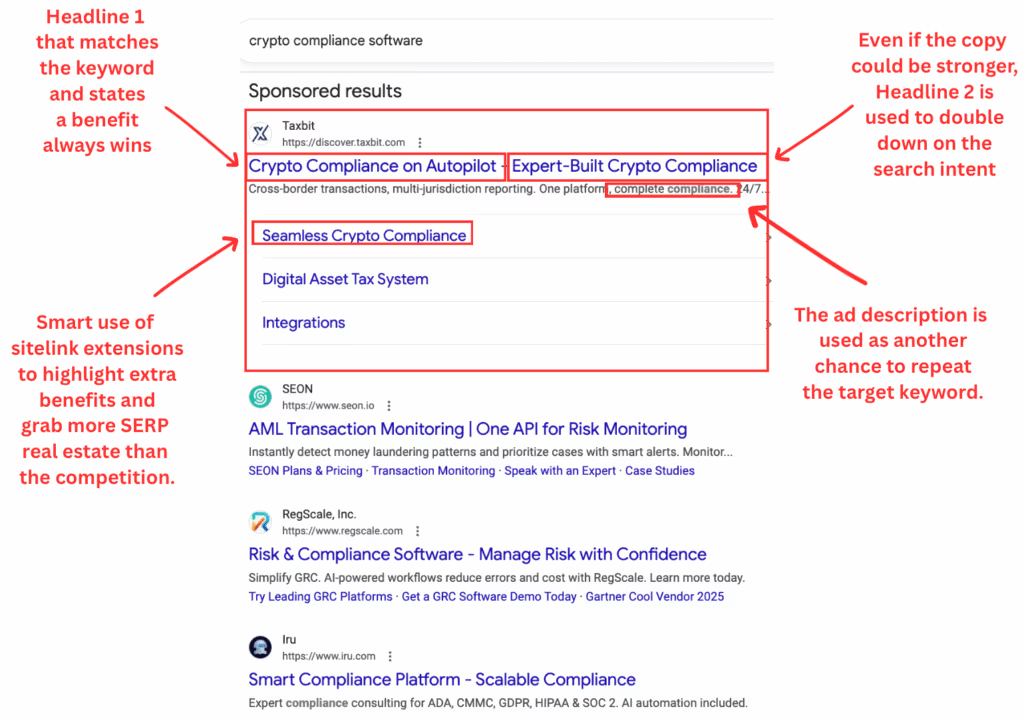
We can bet this high-quality Search ad from TaxBit earns them a lower Cost per Click than competitors on the keyword “crypto compliance software”
Sin #1: Believing You Won’t Get Banned
It is not "if" you will get banned, It is "when"
In crypto, getting banned on Google Ads is not a possibility, it’s a timeline.
If you run long enough, a policy change, a false positive, or an automated review will hit you, so you must build your system assuming the ban is coming.
That is why your setup must be redundant at every level
If you know a ban will come, you do not just harden one account, you build backups for your business entity, payment profiles, ad accounts, domains and even your key campaigns.
a) Business Entity
Your legal entity is the foundation of your ad infrastructure, so you do not want all your risk sitting on a single company.
When it makes sense and stays fully compliant, separating activities into distinct, real business entities can isolate problems and prevent one suspension from freezing your entire operation.
b) Payment Profile
Your payment profile is often the first thing to get flagged when Google sees “risky” activity, so you never want all spend tied to a single card or billing setup.
Having clean, verified backup payment profiles ready lets you keep buying traffic when one method suddenly stops working.
c) Google Ads Account
Your Google Ads account can be suspended without warning, instantly stopping all your campaigns.
That is why you need several accounts created, verified and warmed up, so you can quickly move your traffic if one is shut down.
Set things up so your Search campaigns live in one account and your YouTube campaigns in another, since frequent creative changes on YouTube tend to trigger more reviews and suspensions.
Also keep at least one backup account with different billing information and a different domain, especially if you run multiple offers or geos, so you always have a clean environment ready when an account is hit.
d) Domain names
Your main domain can get flagged or suspended and then every new campaign that uses it will be blocked or struggle.
You need at least one or two backup domains prepared with cloned, compliant landing pages so you can keep your funnel running if your primary domain is hit.
e) Campaigns
Your campaigns themselves should also exist in backup form.
Keep cloned versions of your key campaigns in drafts or in another account, so if one campaign or structure gets restricted you can relaunch almost instantly without rebuilding everything from scratch.
Be Ready to Appeal the Ban
When a ban hits, it helps a lot if your appeal plan is already in place.
Keep the relevant policies bookmarked, and your business documents and screenshots of your landing pages organized, so you can react quickly and submit a solid appeal within hours instead of scrambling to gather everything at the last minute.
Being financially ready for the Ban
When a ban hits, your cash flow from Google Ads can drop to zero overnight, so you need to plan for that in advance.
Keep a financial cushion and avoid depending on Google Ads too much or on any other ad platform (Meta, Linkedin…) to cover your fixed costs, so a suspension is a shock, not a death sentence.
Keep your billing clean and your bills paid on time
Google is much less forgiving when your billing looks messy or unreliable.
Make sure your invoices are paid on time and you are not constantly switching cards or profiles, so you do not trigger avoidable reviews on top of the risk that already comes with running crypto ads.
Build a solid business footprint
Google is much more comfortable sending traffic to a business that looks real and consistent everywhere.
Put in place a proper foundation with a verified Google Business Profile, a real company structure with LLC, EIN and business bank account, a domain based email instead of a free address, and payment accounts like Stripe or PayPal that clearly match your brand.
When your name, address and phone number line up across all these elements, you look like a legitimate firm, not a phantom entity that suddenly appeared to run risky crypto ads.
Warm up your ad account before going full crypto
Do not open a fresh account and hit it with aggressive crypto offers on day one. Start by running safer, lower tension campaigns such as brand, content or educational angles with modest budgets, so the account builds some clean history and trust.
Once you have stable performance and a bit of conversion data, then introduce your more sensitive crypto campaigns instead of asking a cold account to survive maximum scrutiny from the start.
Make your offer and intentions transparent
On the user side, everything should feel clear and straightforward.
Show visible legal pages, risk disclaimers and a privacy policy, explain in plain language what you do and what the user is getting, and use opt in forms that say exactly how their data will be used, instead of hiding conditions in fine print.
Get certified where it is required
In many key markets you simply will not be allowed to advertise crypto products without proper regulatory status and Google’s own financial or crypto advertiser certification.
Treat this as part of the entry ticket for serious campaigns and make sure you apply early, because you do not want your entire funnel ready while your verification is still pending.
Be mild in your copy and do not overpromise
Keep both your ads and landing pages very calm and grounded, focusing on concrete features such as security, UX and support rather than on financial gains.
The more your message sounds like realistic utility instead of promises of profit, the safer you are and the easier it is for users and Google to trust you.
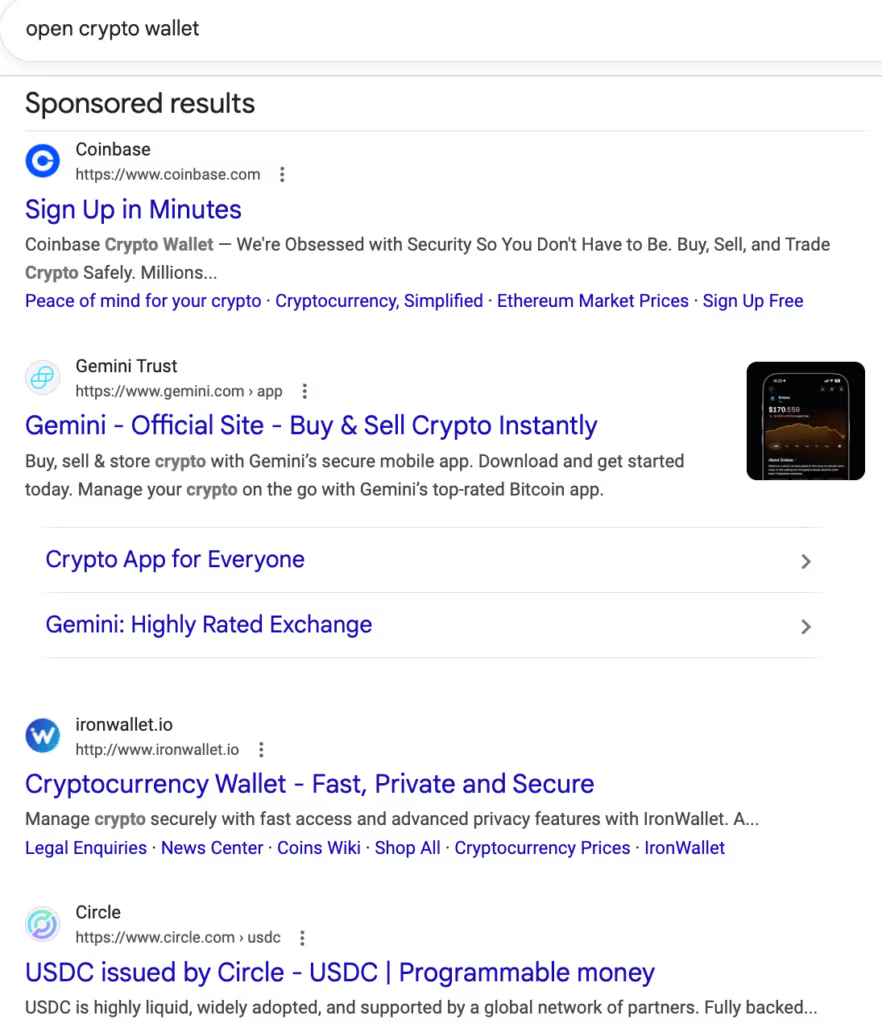
These ads are very restrained in their messaging and deliberately avoid any promise of gains or financial upside in order to minimise risk.
Avoid Patterns That Trigger Automation
Google’s enforcement in crypto is largely automated and it makes mistakes, so you want to avoid behaviours that look risky to the system even if you are clean.
a) Sudden spikes in ad spend
If you launch a new crypto campaign and try to push big budgets on day one, you increase the chance of a review or suspension.
Start small, for example fifty dollars a day, let the account build some history, then scale gradually instead of jumping straight to five hundred dollars a day.
b) Constant edits to running ads
Every time you change ads, extensions or core settings, you invite fresh reviews.
Aim for stability: plan your tests, batch your edits and avoid rewriting creatives and structures every day unless you really have to.
c) Weak or messy landing pages
Sending traffic to pages with unclear calls to action, broken links, generic boilerplate or thin content makes the whole setup look low quality.
Keep your pages fast, readable and focused, with a clear next step for the user and no obvious technical issues.
d) Short lived domains with no footprint
Domains that appear, run hard in crypto and then vanish are exactly what the system is trying to catch.
Use domains that have some history, real content and visible brand presence instead of constantly swapping to fresh shells with no trust signals.
Avoid affiliation setups
In crypto, Google is much harsher on affiliate and comparison style funnels than on direct advertisers.
Whenever possible, promote your own regulated product or brand instead of running as an affiliate or generic comparison site, which are far more likely to be flagged or restricted.
Sin #3: Treating One Cold Click Like A Ready-To-Invest Lead
Investing in crypto is a high friction, low trust decision
When someone lands on your crypto offer from a Google ad, their default state is suspicion, not excitement.
They have seen scams, hacks and rug pulls, so every step toward investing feels risky and requires more reassurance than in almost any other niche.
Stop expecting the first click to convert
In this niche, sending cold traffic straight to “Open an account” or “Deposit now” is a great way to burn money.
You need a real funnel that warms people up step by step instead of treating a first click like a ready to invest lead.
Shift from “buy now” to “let’s start working together”
The goal of a first click in crypto is not to close a sale, it is to open a relationship.
Think in terms of earning permission to educate, follow up and prove you are legit, instead of trying to squeeze a deposit or signup out of someone who has just discovered you.
What a realistic Google Ads funnel looks like for crypto
A sane crypto funnel moves people through clear stages where each step reduces fear and increases trust.
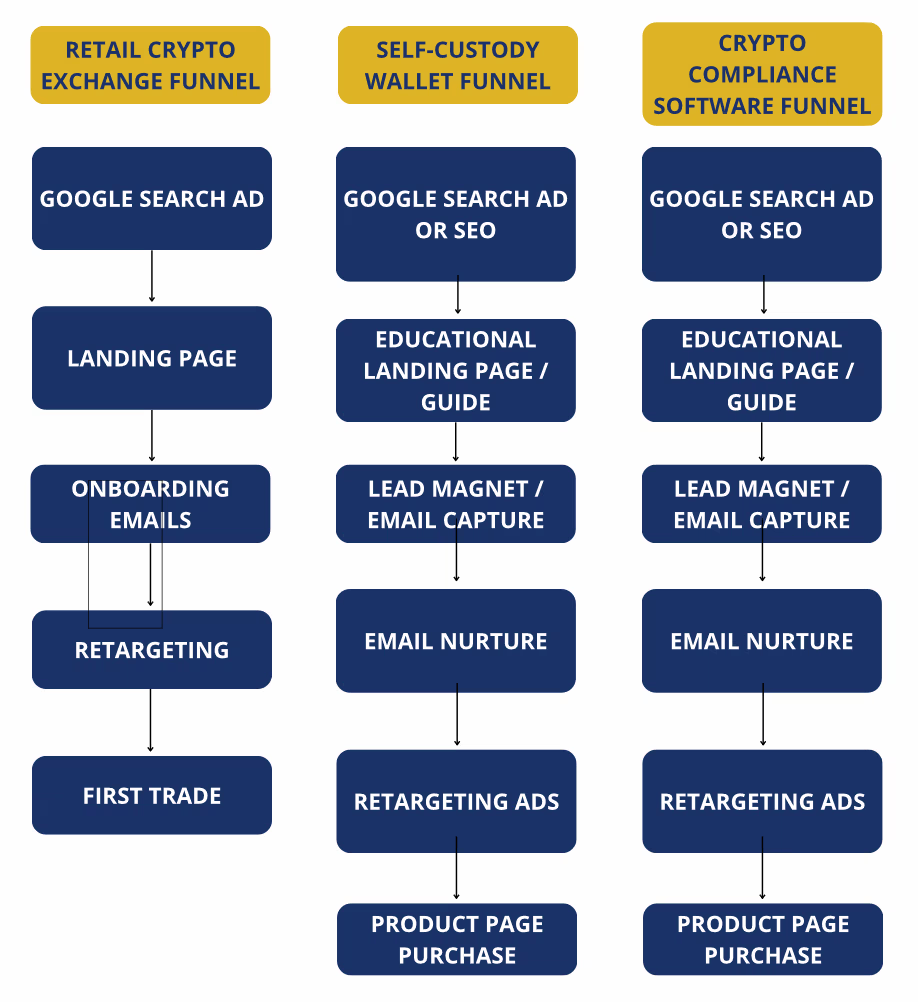
You can think of it in three levels:
Stage 1: Awareness Ad sends people to a low friction value offer such as a guide, checklist, simple tool or webinar. The goal here is to get an email or at least tag them for retargeting, not to sell.
Stage 2: Consideration Over the next five to ten days you follow up by email and/or retargeting and focus on education and proof.
This is where you show case studies, explain your security model, highlight audits and make it clear who is behind the project.
Stage 3: Decision Once trust is built, you present a soft but precise call to action such as opening an account, booking a call or starting with a small initial amount. At this point the user is no longer a cold click, they are someone who understands what you do and why they might say yes.
3 typical, realistic crypto funnels from ad click to conversion
With this kind of funnel, a brand campaign is mandatory
Once you start running search, content and retargeting, you will see brand searches appear in your reports because people look up your name before making a decision.
A brand campaign helps you control that last step by capturing these low cost, high intent searches with your own message, instead of leaving the space open for competitors or random results to take the click.
Retargeting is how you turn visits into decisions
Retargeting lets you speak differently to someone who only read your “What we do” page, someone who checked your security section and someone who reached the pricing or onboarding flow.
By segmenting these visitors and following up with ads that match exactly where they stopped, you turn anonymous traffic into a sequence of deliberate steps that naturally leads to creating an account or moving funds.
Storytelling converts, and video is your strongest channel for it
Video is one of the best formats to plug into this kind of funnel because it lets you tell a story, not just list features.
You can show how your platform fits into a real person’s life, explain why you built it, introduce the team and walk through security in a narrative that feels human.
Short YouTube or in feed videos are ideal for retargeting, turning previous visitors into viewers who follow your story, start to trust you and are much more likely to take the next step.
Human-faced video is one of the most effective ways to engage people and communicate your message clearly
In this kind of multi step crypto funnel, the performance is not decided on the first day or the first deposit, so staring at Day 1 ROAS will only mislead you.
What matters is how efficiently you move people through the journey and what they are worth over the next months.
The key metrics to watch are simple.
Cost per lead or email, to see how expensive it is to start the relationship.
Lead to signup rate, to know if your nurture and onboarding do their job.
Signup to funded or activated user rate, to see if people actually move money or meaningfully use the platform.
And finally, thirty to ninety day lifetime value compared to customer acquisition cost, so you judge the funnel on real economics instead of asking “did we make money this week”.
Sin #4: Venturing Into An Expensive Market Without A Cost Shield
Only pay high CPCs for high intent searches
In crypto, a single click can cost ten to fifty dollars, so the real sin is paying that price for vague, low intent queries like “crypto” or “bitcoin price”.
Your money should go to people who are clearly looking for what you actually offer, for example “open crypto ira account”, “secure usdt wallet for business” or “move crypto to cold storage”.
This also means building your core around exact and phrasematch keywords instead of letting Broad Match spray your budget on anything loosely related.
Keywords to target
Keywords to avoid
buy ethereum instantly
ethereum
best platform to buy ethereum
what is ethereum
ethereum exchange with low fees
ethereum news
buy ethereum with bank transfer
ethereum price
buy ethereum in [country]
ethereum prediction
In this example, our goal is to go after strategic keywords around the topic “ethereum exchange platform.”
Left column – High-intent, transactional keywords worth paying a high CPC for if you want to maximize short-term ROI.
Right column – Vague or research-oriented keywords to avoid at the beginning if your goal is immediate ROI.
Group your keywords in tight, laser focused ad groups
If every click costs a small fortune, you cannot afford messy structures.
Break your account into many small ad groups where all the keywords are closely related, so your ads and landing pages can speak exactly to that one topic and squeeze the maximum value out of every visit.
Match each tight ad group with its own landing page
If you pay premium CPCs, every click deserves a page that speaks exactly to its intent, so do not send all traffic to a generic homepage.
Multiply your landing pages by vertical or use case and align each one with a specific ad group, so relevance goes up, quality scores improve and your effective cost per acquisition comes down.
Having your first headline nail the exact keyword intent is the #1 way to boost your click-through rate (Clicks/Impressions).
And when you pair that with a landing page that matches the same intent and makes the value proposition answering it the most visible thing on the page, that’s how you build a lead engine.
Use negative keywords as your cost filter in crypto
In crypto, your search terms will quickly fill with people looking for prices, charts, news, airdrops or “is this a scam” threads, not for a platform to actually use.
Clean that up fast by adding negatives around jobs, definitions, Reddit, free signals, airdrops and pure “price” queries, so your budget is reserved for users who are genuinely looking for a product or account, not just information or hype.
Hold Performance Max until your data is solid
In a fresh crypto account with little or no conversion history, Performance Max has nothing reliable to learn from and will burn money testing expensive placements and audiences.
Start with tightly controlled search campaigns, build real conversion data, then introduce Performance Max later if you want to scale profitably instead of guessing.
Sin #5: Tracking Everything But The Actual Money
Running blind in a high cost market is suicide
In crypto, tracking only form submissions is not enough.
You need granular conversion tracking with clear micro signals such as whitepaper downloads, security page views, pricing page views or email captures, and real macro conversions such as completed registrations, KYC approved accounts and first deposits.
With all these conversions you’ll both give the algorithm enough data to optimise and see exactly how users progress through each step of your funnel.
Here’s a good example of a micro-conversion to track: out of 100 visitors on this page, how many use the cost simulator
Track until the money shows up, not just until the form is filled
In crypto, not all leads are equal, so you need to see which ones actually turn into funded or active users.
Connect your ad data with your product or CRM data and, if needed, use offline conversion imports so Google can learn the difference between a freebie hunter and someone who completed KYC, deposited funds or started trading, and optimise toward the users who really produce profit.
Sin #6: Expecting Money Before Earning Trust
When someone arrives from Google Ads and has never heard of you, they are asking one thing before anything else:
“Can I really trust these people with my money or my wallet?”
If your page does not answer that clearly, the rest of your strategy does not matter.
Make it obvious that real people stand behind the project
Show a clear company name, the legal entity behind the project and a real postal address.
Make your About and Contact pages easy to find from the main navigation, not hidden in a small footer link.
Add a team section with faces, short bios and links to LinkedIn profiles so visitors immediately see who is responsible for the platform.
Show clearly how you protect money and what can go wrong
People in crypto want to know exactly how safe their assets are with you.
If you have smart contract or platform audits from firms such as CertiK or Trail of Bits, show the logos and link directly to the reports.
If you are regulated or licensed in a country, say it in simple language and display the license number instead of vague “we are compliant” claims.
Explain custody in plain words. Who holds what, where it is held and what happens if something goes wrong.
Add visible risk disclosures written in normal language that people can actually read, not tiny legal blocks hidden at the bottom of the page.
Make the page feel calm, clear and under control
The way the page feels is part of the trust signal.
Avoid chaotic layouts, aggressive pop ups, spinning wheels and fake urgency timers unless you are literally running a casino product.
The design should be clean and calm, with a simple hierarchy and a clear primary action, so users feel in control rather than pressured.
WHAT WE LIKE: despite the weak visibility (grey on black) and the fact that Binance is already a very famous brand, it still goes out of its way to highlight top-tier media brands like Forbes, Fortune and CNBC as social proof on this landing page.
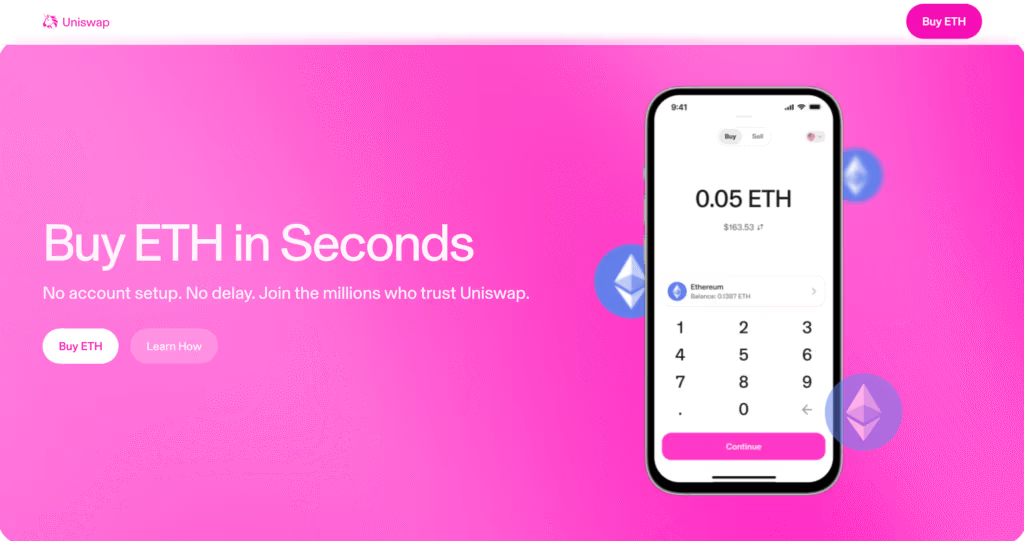
WHAT WE LIKE LESS: On this landing page, Uniswap seems to seriously underestimate the importance of social proof, even though it is a well-known brand in the crypto space.
Sin #7: Flirting with Black Hat Tactics
In a niche as sensitive as crypto, there is always the temptation to “bend the rules a little” to get campaigns live or push more aggressive offers.
The problem is that these shortcuts do not just risk a disapproval, they put your entire ad infrastructure, domains and brand at stake.
Cloaking: showing one thing to Google and another to users
Cloaking means presenting a clean, compliant version of your site to Google’s review systems while regular users see a completely different, often much riskier offer.
Even if this feels clever in the short term, it is exactly the kind of behaviour that gets labelled as misrepresentation or circumventing systems, and once detected it can burn your account, your domain and even your business details for future setups.
Do not run two different faces of the same brand
It is normal to adapt your messaging to local rules, but it becomes a problem when you present yourself as a cautious “educational” resource in strict markets like the US or EU while pushing aggressive, high pressure investment claims under the exact same brand in other countries.
Google evaluates your account and domain as a whole, so a policy issue triggered by the wild version can affect everything, including the “safe” markets.
On top of that, once users, partners or regulators notice this double personality, your credibility collapses, because it looks like you are hiding what you really are rather than simply localising your offer.
Hiding a sales funnel behind “education”
There is nothing wrong with genuine education, but calling yourself a “crypto academy” or “research hub” while the real goal is to push people into an undisclosed product or investment crosses the line.
If your content is just a thin wrapper that funnels users into a platform you never clearly name or describe, both users and reviewers will eventually treat it as a bait and switch instead of an honest educational step in the journey.
Treating accounts and domains as disposable
Each time you switch to a new account or domain, you wipe out your conversion history and force the algorithm to relearn from zero.
In a market where clicks are so expensive, constantly resetting your data means you never reach the stage where Smart Bidding, audience signals and tested creatives finally start working in your favour (more conversions for a lower cost).
Let us Generate Qualified Leads for your Crypto business